Developer Screening: Why 197 of 200 Don't Make It
Most developers who apply never reach a client interview. See the five screening stages we use, what each one catches, and how to apply them yourself.

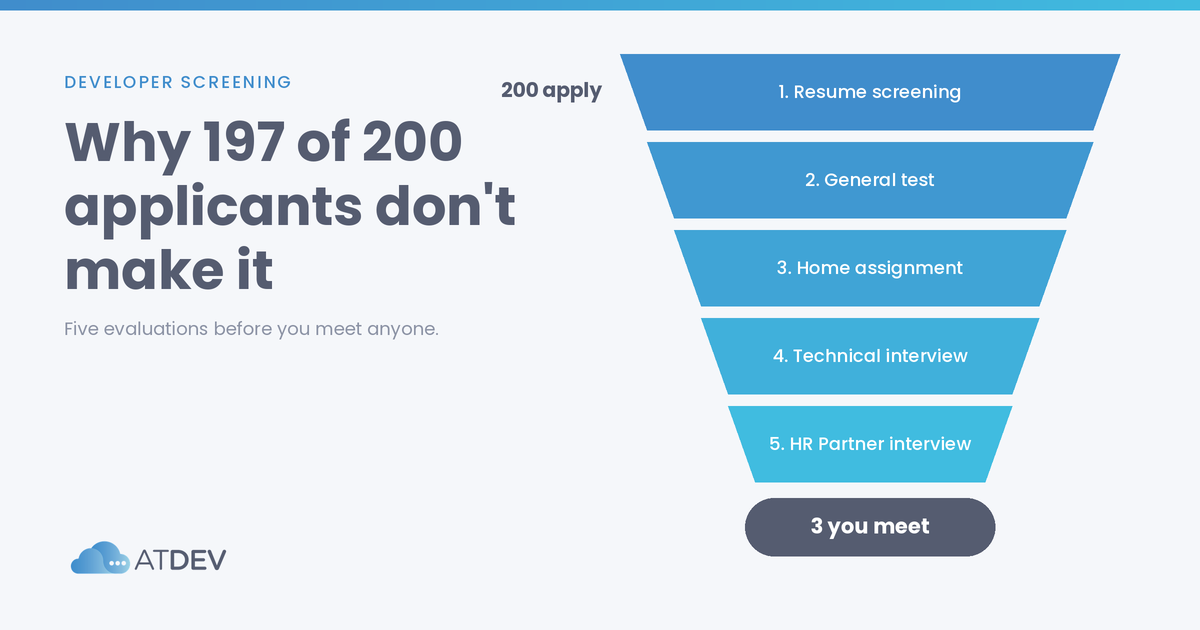
Table of Content expand_more
On average, about 200 developers apply. Three of them reach a client interview.
That isn't a talent shortage. Most applicants can write code. The question developer screening has to answer is: can this person do this job on this team without someone checking their work every day?
A résumé can't answer that. Here's the process we use to find out, stage by stage, and how to apply it to your own hiring.
Why résumés don't predict performance
Résumés are written to get past filters. Titles inflate, keyword lists grow, and "senior" means something different at every company. A developer with eight years on one legacy system can look identical on paper to one with eight years of varied, modern work.
Good screening replaces claims with evidence. Each stage below asks candidates to show something a résumé can only describe.
The five stages of our developer screening
Every candidate goes through the same five stages, in the same order. No one skips a stage on a referral or a favor, and anyone who falls short doesn't move on.
1. Resume screening
A recruiter checks experience, stack fit, seniority, English level, and availability. Only candidates who fit the role move on.
What it catches: applicants who look close but aren't, like a strong React developer applying for a Salesforce role.
For your own process: write down the must-haves before you read a single résumé. Otherwise, the most impressive résumé quietly rewrites the job description.
2. General test
An online assessment measures English proficiency (CEFR level), attention to detail, values and conduct, and work style. Each result is benchmarked against other test-takers.
What it catches: communication gaps. For a remote developer joining U.S. standups, English is part of the job, not a nice-to-have.
For your own process: test English directly. A smooth interview with a recruiter tells you less than you think about how someone explains a bug to a product manager.
3. Home assignment
Candidates complete a practical task built around the role's real work. It's rated on correctness, quality, following instructions, documentation, and on-time delivery.
What it catches: people who interview well but struggle to deliver. Instructions and deadlines matter as much as the code.
For your own process: make the task look like the actual job, keep it to a few hours, and score it against a written rubric so two reviewers reach the same conclusion.
4. Technical interview
A specialist in the role's stack runs a live video interview. Candidates walk through their assignment, and reviewers rate each technical area as Strong, Moderate, or Weak.
What it catches: work that isn't the candidate's own. Someone who copied or generated a solution can usually present it, but can't explain the trade-offs or change it on the spot. The walkthrough exposes that in minutes.
For your own process: always ask candidates to explain why they built it that way, then ask them to change one thing live.
5. HR Partner interview
A behavioral interview covers work style, integrity and reliability, adaptability, analytical thinking, and readiness for remote work.
What it catches: the problems that end most placements. Strong developers rarely fail on skills. They fail on communication, reliability, or fit.
For your own process: ask about real past situations, like a missed deadline or a disagreement with a lead, instead of hypothetical ones.
What you get at the end
Passing all five stages produces a two-page Candidate Summary Report with four sections: candidate profile, work-style profile, technical evaluation, and HR Partner analysis. We record and transcribe interviews internally, so everything is accurate.
We never use the work-style profile alone to accept or reject anyone. It helps you picture how the person will work on your team.
You can see a sample report, and each stage in more detail, on our developer screening process page.
The final step: interviews with your team
The five stages narrow the field. You make the final decision, and how you run that last interview matters. The best results we've seen come from having at least two people interview each candidate, separately. Usually, that's the hiring manager on one side and a supervisor or future teammate on the other. Two separate conversations give you a clearer picture of both technical knowledge and culture fit than one interview can.
Some of our clients go a step further with a group interview. The team meets its future colleague, asks the questions it cares about, and sees how much the candidate really knows. It's one of the most useful final steps we've seen.
For your own process: have each interviewer write down their impressions before comparing notes, so one strong opinion doesn't shape the other.
Five rules for screening developers yourself
If you run your own process, these do most of the work:
- Same stages for everyone. Skipping steps for a referral is how weak hires get through.
- One rubric per stage. Decide what "strong" means before you see a candidate.
- Test the real job. A practical assignment beats puzzle questions.
- Make them explain their work. The walkthrough is your best defense against copied code.
- Write findings down. Notes from each stage let you compare candidates fairly, weeks later.
The bottom line
Developer screening determines whether hires succeed or fail, long before day one. A strict process means you interview fewer people, and each one is worth your time.
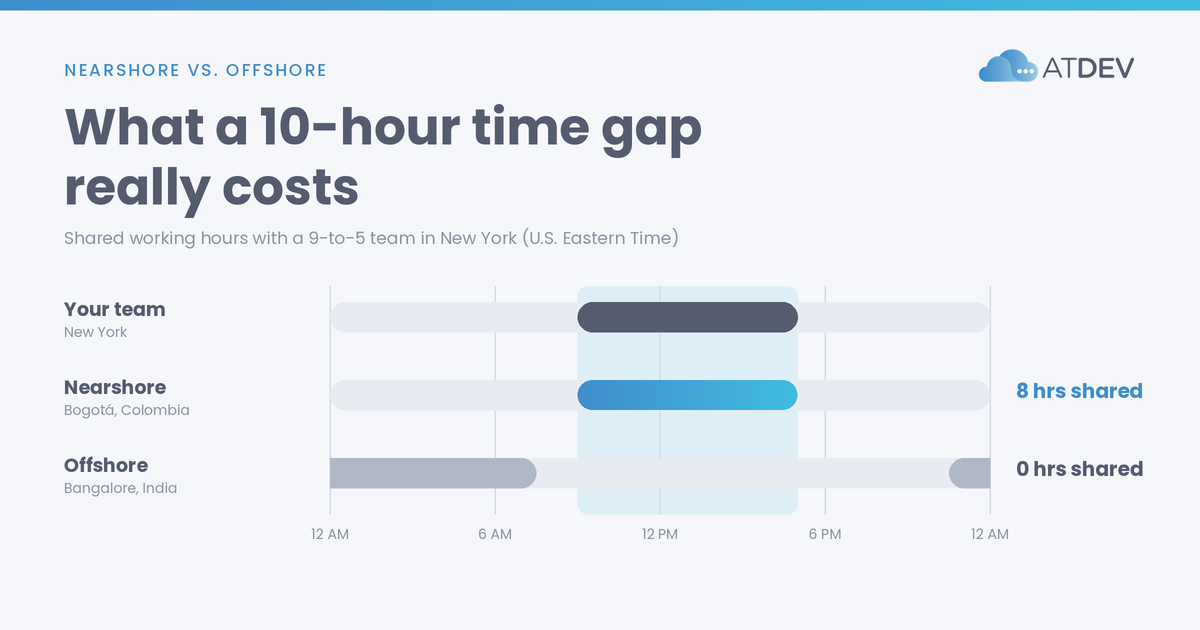
If you'd rather not run five stages yourself, we do it for you, whether you hire candidates directly through IT Recruiting or add them to your team through nearshore staff augmentation. Wondering whether a nearshore developer fits your team's hours? Read Nearshore vs. Offshore: What a Time Gap Costs.
Hiring a developer this quarter? Book a free discovery call, and we'll walk you through how we'd screen for your role.
FAQ
What is developer screening?
Developer screening checks a candidate's skills, communication, and fit before a hiring manager interviews them. A good process uses practical tests and expert interviews, not just a résumé review.
Should I use take-home assignments?
Yes, if they mirror the real job and take a few hours, not days. Pair the assignment with a live walkthrough so you know the work is the candidate's own.
How do you know a candidate didn't copy their assignment?
Ask them to walk through it live, explain their choices, and make a small change on the spot. Someone who didn't write the code usually can't.
How long does developer screening take?
With us, most roles take 1–3 weeks from the moment we understand your requirements, and Salesforce roles can take as few as 5 business days.